Your overall health and the state of your teeth are both affected by and cause…
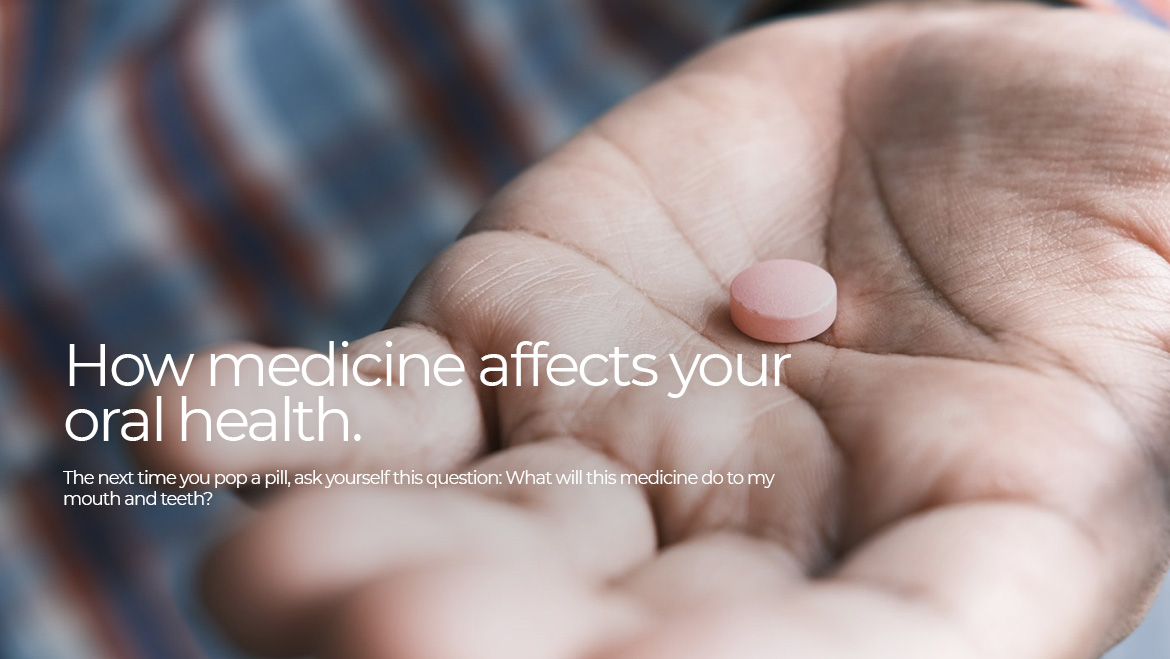
Generally speaking, medicines are made to make you feel better. But all drugs, whether taken by mouth or injected, come with a risk of side effects and hundreds of drugs are known to cause mouth (oral) problems. Medicines used to treat cancer, high blood pressure, severe pain, depression, allergies, and even the common cold, can harm your dental health. That’s why your dentist, not just your doctor, should always know about all the medications you are taking, including over-the-counter products, vitamins, and supplements.
Some of the most common mouth-related (oral) side effects of medications are;
- Dry Mouth (Xerostomia)
- Fungal Infection
- Gum Swelling (Gingival Overgrowth)
- Inflammation of the Lining Inside of the Mouth (Mucositis)
- Mouth Sores (Ulcers)
- Taste Changes, Including Metallic Taste
- Tooth Decay
- Tooth Discoloration
More than 400 medications have the potential to cause dry mouth. Saliva cleans your mouth but, if it’s not flowing normally and dry mouth develops, you’ll be more prone to gum infections and tooth decay.
The most common types of medications that cause dry mouth include:
- Antihistamines
- Decongestants
- High blood pressure medications (including diuretics, calcium channel blockers, and angiotensin-converting enzyme inhibitors)
- Antidepressants
- Sedatives
- Pain medications
- Parkinson’s disease medications
- Antacids
Conclusion
If a drug is causing you bothersome oral health side effects, let your doctor know. In many cases, you may be able to take a different type of medication or make lifestyle changes that minimize the side effects. And, as always, take care of your mouth by regularly brushing and flossing your teeth, getting regular dental checkups from Dr Raphela Dental Surgery, and treating any problems that arise.
CONTACT US TODAY: BURGERSFORT | LYDENBURG | STEELPOORT
Related Posts