Your overall health and the state of your teeth are both affected by and cause…
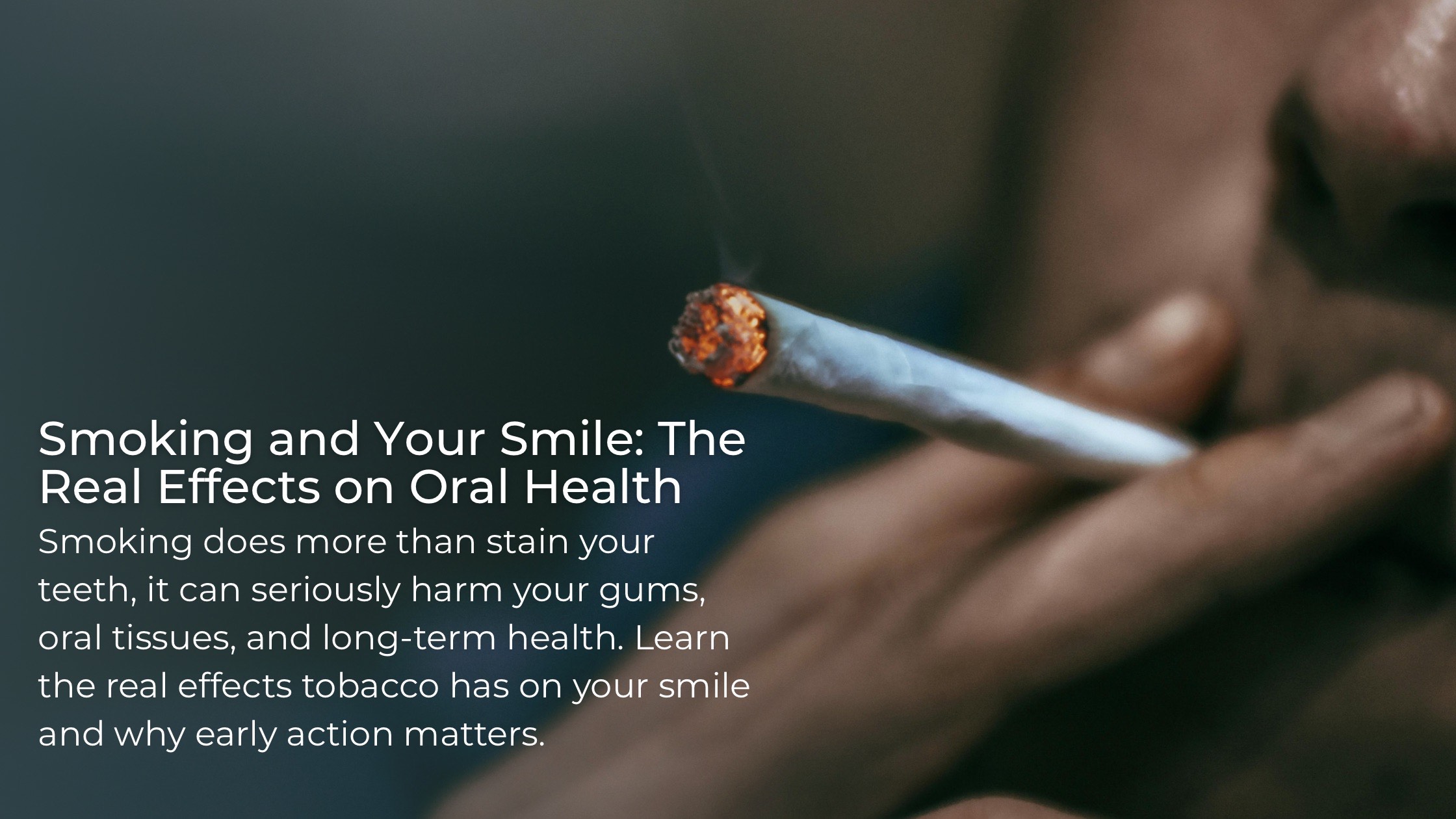
Smoking’s detrimental effects on dental health are frequently overlooked, despite the fact that most people link it to heart and lung disease. Almost every area of the mouth is impacted by the tobacco use, from soft tissues to the teeth and gums, and the effects can be serious if untreated. To safeguard your long-term dental and general health, you must be aware of these concerns.
1. Stained Teeth and Persistent Bad Breath
Nicotine and tar in cigarettes adhere to tooth enamel, causing yellow and brown staining that is difficult to remove with brushing alone. These stains get more deeply embedded with time, necessitating professional whitening and cleaning. Smoking also reduces saliva flow, allowing bacteria to grow and cause persistent foul breath.
2. Increased Risk of Gum Disease
Periodontal disease is one of the most detrimental effects of smoking on dental health. Smoking:
- Reduces the body’s ability to fight infection
- Weakens blood flow to the gums
- Masks signs of gum inflammation
This indicates that gum disease advances more quickly and aggressively in smokers. Gum recession, loose teeth, and ultimately tooth loss can result from it if treatment is not received.
3. Slow Healing After Dental Procedures
Smoking interferes with the body’s ability to repair itself. Smokers frequently have inferior treatment outcomes, a higher risk of infection, and delayed recovery following extractions, implants, periodontal therapy, or oral surgery. For this reason, before having complex dental operations, particularly implants, many dentists advise stopping.
4. Higher Risk of Oral Cancer
Many carcinogenic compounds found in tobacco raise the chance of developing malignancies of the lips, tongue, cheeks, throat, and gums. Because dentists can identify abnormal changes long before symptoms manifest, routine dental examinations are essential for early detection.
5. Impact on Dental Implants
Dental implants failure is considerably more likely to occur in smokers. It is more difficult for implants to correctly integrate with the jawbone when there is reduced bone density, poor blood circulation, and slow healing.
What You Can Do Today
If you smoke, you can significantly lower your risks by doing the following:
- Maintain good oral hygiene, schedule cleanings every 6 months or more frequently
- Keep an eye out for any changes in your mouth
- Talk to a healthcare expert about smoking cessation strategies
- Seek assistance as soon as possible, prevention always produces better results.
Oral health can be considerably improved even by cutting back on daily cigarette consumption.
Conclusion
Smoking has far-reaching consequences that go beyond appearance. It increases your risk of gum disease, slows healing, causes tooth damage, and increases your chances of developing oral cancer. Positive changes should be made as soon as possible to improve your long-term dental and general health.
Related Posts